Is Grad School for Me?
An event for undergraduates
Location
Online
Is Grad School for Me? – Online Event
Date & Time
February 21, 2025, 2:00 pm – 3:30 pm
Description
The Latin American Feminisms Working group presents an event geared towards undergraduate students:
Translating Humanities-Related Skills to the Workplace
Humanities Retrievers Workshop
Location
Performing Arts & Humanities Building : 216
Date & Time
October 23, 2024, 12:00 pm – 1:00 pm
Description
Looking Good on Paper: Resumes, CVs, Websites, and Beyond
Humanities Retrievers Workshop
Location
Performing Arts & Humanities Building : 216
Date & Time
September 18, 2024, 12:00 pm – 1:00 pm
Description
Center for Ethics and Values: Faculty & Student Discussion with Lunch
Department of Philosophy
Location
Information Technology/Engineering : 229
Date & Time
September 18, 2024, 11:30 am – 1:00 pm
Description
Location
Performing Arts & Humanities Building : 216
Date & Time
September 11, 2024, 12:00 pm – 1:00 pm
Description
Humanities Retrievers: Welcome Week Meet-and-Greet
Refreshments Provided!
Location
Performing Arts & Humanities Building : 216
Date & Time
August 28, 2024, 12:00 pm – 1:30 pm
Description
Flickering Treasures
Rediscovering Baltimore's Forgotten Movie Theaters
Location
Performing Arts & Humanities Building : 132
Date & Time
April 11, 2018, 7:00 pm – 8:30 pm
Description
Focus on Gentrification in Baltimore
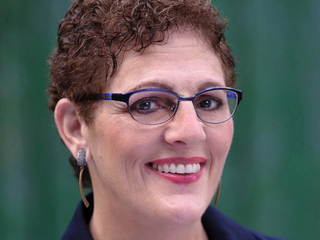
Amy Davis, author and Baltimore Sunphotojournalist
Author and Baltimore Sun photojournalist Amy Davis presents a slide show and discussion on Flickering Treasures: Rediscovering Baltimore’s Forgotten Movie Theaters. A fresh story of Baltimore emerges through the social, cultural and architectural prism of its movie theaters. Rare vintage photos, combined with Davis’s evocative color photography and poignant reminiscences, bring a century of movie-going to life.
A book signing will follow the program.
Speaker bio: Amy Davis, an award-winning photojournalist for the Baltimore Sun, spent nine years researching and photographing Baltimore’s movie theaters for Flickering Treasures. Her fine art training from The Cooper Union informs her documentary approach. Her photographic work is in the collection of the Hudson River Museum (Yonkers, NY), and has been exhibited at The Brooklyn Museum, The Jewish Museum of Maryland, and at Baltimore area galleries. Amy lives in Baltimore near the 1939 Senator Theater, which helped inspire her book.
Sponsored by the Dresher Center for the Humanities, the English Department, and the Visual Arts Department
Becoming Bridge-Builders and Disrupters
Navigating Racial and Gender Realities in America Today
Location
Library and Gallery, Albin O. Kuhn : Library Gallery
Date & Time
March 8, 2018, 4:00 pm – 5:30 pm
Description
11th Annual Korenman Lecture
.png?1737340316)
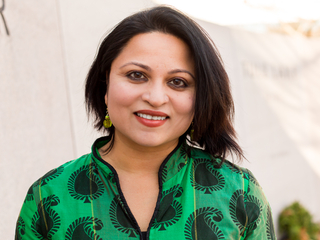
Deepa Iyer, South Asian American activisit, writer, and lawyer
America is becoming a nation in which communities of color will comprise the majority population by 2040. In her talk, Deepa Iyer, a racial justice advocate and writer, will explore the racial realities affecting people of color, women, and immigrants and refugees in America today. She will share stories of struggle and resistance from communities affected by backlash, xenophobia and Islamophobia. Iyer will provide ideas for maintaining equitable and inclusive policies and institutions that reflect the racial realities and intersectional identities of communities in America.
A book signing will follow the program.
Speaker bio: Deepa Iyer is a South Asian-American writer, lawyer, and racial justice advocate. Iyer’s areas of expertise include the post-9/11 America experiences of South Asian, Muslim, Arab and Sikh immigrants; national security and immigration policies; and racial equity and solidarity practices. Iyer served for a decade as the Executive Director of South Asian Americans Leading Together (SAALT) where she helped to shape SAALT’s work on civil and immigrant rights issues. Her experiences there formed the basis for her first book, We Too Sing America: South Asian, Arab, Muslim and Sikh Immigrants Shape Our Multiracial Future, which received a 2016 American Book Award and was selected as a top 10 multicultural non-fiction books of 2015 by Booklist. Since We Too Sing America was published, Iyer has been part of over 50 community conversations around the country on the themes in the book, at college campuses, non-profit organizations, faith-based institutions among others. Iyer’s current work includes a collaborative project around rapid response coordination in the wake of criminalization policies and efforts and a solidarity project which includes a monthly podcast called Solidarity Is This.
Sponsored by the Gender + Women's Studies Department; the Dresher Center for the Humanities; the College of Arts, Humanities, and Social Sciences; the Office of the Provost; Student Life's Mosaic Center; the Women's Center; the Global Studies Program; the Media and Communication Studies Department; the Modern Languages, Linguistics, and Intercultural Communication Department; the Africana Studies Department; the American Studies Department; and the Asian Studies Program.
James Smalls: The Mark Rice Collection
The Homo-Erotics of Photography after Stonewall
Location
Library and Gallery, Albin O. Kuhn : Library Gallery
Date & Time
December 7, 2017, 4:00 pm – 5:30 pm
Description
James Smalls, Professor of Visual Arts, Affiliate Professor of Gender and Women’s Studies, and Affiliate Professor of Africana Studies, UMBC
This talk considers the social, cultural, and aesthetic dynamics of the nude figure in gay male photography. It explores the aesthetics and reception of the Mark Rice Collection of photographs, on exhibit in the Albin O. Kuhn Gallery from August 30th to December 12th, whose subject matter engages the mostly nude male body. The collection constitutes part of what is classified as gay male photography produced after the 1969 Stonewall Rebellion. The majority of the images date to the 1990s and will be considered in this historical context.
Bio: James Smalls’ research and publications focus on the intersections of race, gender, and queer sexuality issues in nineteenth-century European art and in the art and culture of the black diaspora. He is the author of Homosexuality in Art (Parkstone Press, 2003), and The Homoerotic Photography of Carl Van Vechten: Public Face, Private Thoughts (Temple University Press, 2006). He is currently completing a book entitled FéralBenga: African Muse of Modernism.
Sponsored by the Albin O. Kuhn Library and Gallery, Dresher Center for the Humanities,and the Gender + Women’s Studies Department.
Nuclear Pain and Humanitarian Photography
Morizumi Takashi, the Gulf Wars, and Fukushima
Location
Library and Gallery, Albin O. Kuhn : Library Gallery
Date & Time
November 15, 2017, 4:00 pm – 5:30 pm
Description
Julia Adeney Thomas, Associate Professor, University of Notre Dame
Can photography help us see suffering and end nuclear destruction? Linking three moments of atomic calamity – the Hiroshima atomic bombing, the uranium-tipped weapons in the First Gulf War, and the Fukushima nuclear plant meltdown – photographer Morizumi Takashi’s images attempt to find aesthetic leverage against the nuclearization of war and energy. This lecture explores the ethics of sight and how humanitarian efforts are both enabled and circumscribed by the shifting situations in which a photographer works.
Bio:Julia Adeney Thomas has written extensively about concepts of nature in political ideology, the challenge posed by climate change to the discipline of history, and photography as a political practice in Japan and globally. She is the author of several books including Japan at Nature’s Edge: The Environmental Context of a Global Power (with Ian J. Miller and Brett L. Walker) and Reconfiguring Modernity: Concepts of Nature in Japanese Political Ideology, for which she was the recipient of the American Historical Association’s John K. Fairbank Prize. Currently, she is completing The Historian's Task in the Anthropocene, as well as co-editing a collection entitled Visualizing Fascism: The Rise of the Global Right.
Sponsored by the Asian Studies Program, the Dresher Center for the Humanities, and the History Department. Funded by a grant from the Japan-U.S. Friendship Commission and the Northeast Asia Council of the Association for Asian Studies.
- Go to page 4
- Go to page 3
- Go to page 2
- Go to page 1